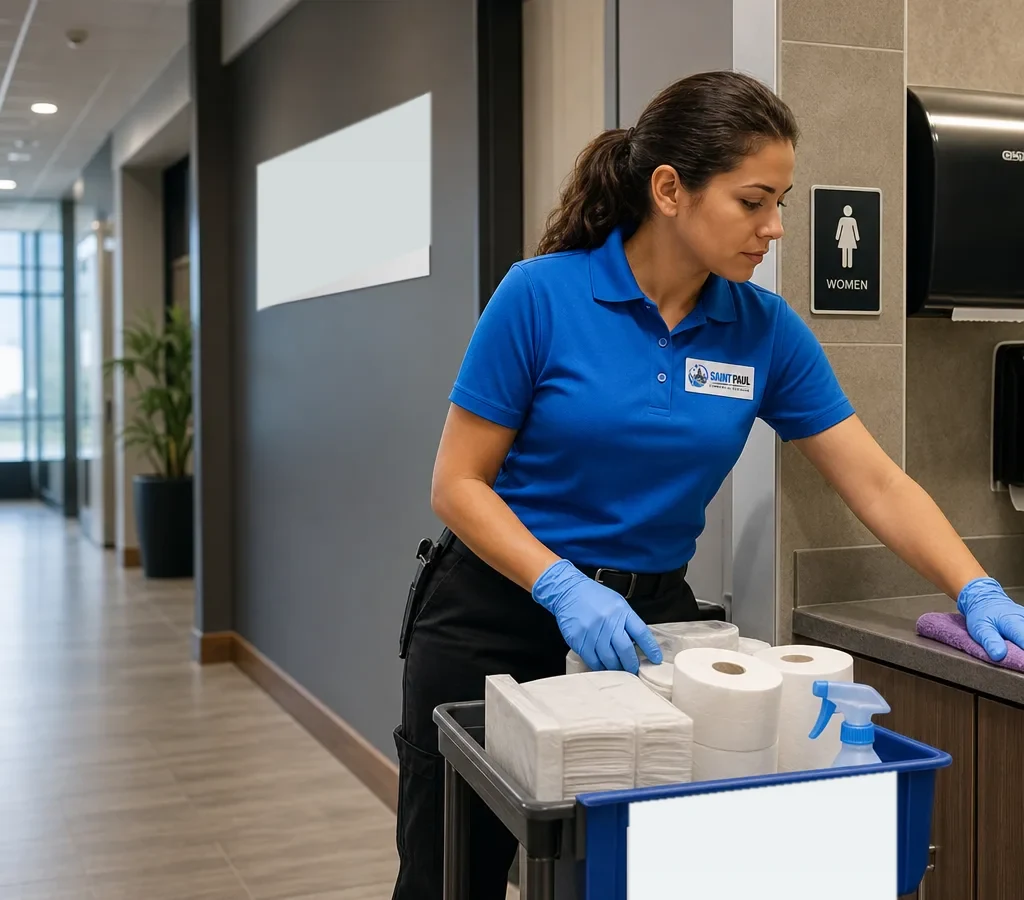
Commercial cleaning technician in a Saint Paul workplace

Industry-specific cleaning in Saint Paul

School and Daycare Cleaning Saint Paul

School and daycare cleaning in Saint Paul for agreed accessible spaces, entries, restrooms, and shared areas. Define priorities around the daily schedule, room use, and access boundaries.

Industry overview

Cleaning Plans for Schools and Daycares

School and daycare cleaning starts with a simple constraint: rooms are used according to the facility’s own daily schedule, so no useful scope assumes that every space is available at every moment. Entries, corridors, shared restrooms, staff areas and agreed common spaces may each have different access arrangements. A practical discussion identifies the spaces the administrator wants included, the priorities for those spaces and the times they can be made available.

That keeps the plan grounded in room use and operational boundaries rather than generic claims about learning environments. It also makes clear what is not being assumed: no child-safety, health, licensing or program-specific promise is built into the copy. The administrator can describe the accessible areas, the surfaces or conditions that need attention and the facility’s own access procedures, then use that information to define an appropriate commercial cleaning scope.

Request an Estimate

Scope and tasks

What the Cleaning Scope Can Cover

Classroom And Common-Area Surface Care In Agreed Spaces

Classrooms and common areas in agreed spaces take heavy daily use from a full roll of children. Surfaces, tables, and shared touchpoints need attention that matches the schedule rather than a generic routine.

Restrooms, Sinks, Fixtures, And Floors

Restrooms and sinks in a school or daycare are used constantly and judged closely by parents. Fixtures, floors, and the areas around basins need a frequency that holds through a full day.

Entryways, Mats, Corridors, And Shared Doors

Entryways, mats, corridors, and shared doors carry the arrival and pickup rush twice a day. Minnesota winter turns that into salt, slush, and grit moving straight into the building.

Staff Rooms, Offices, And Accessible Break Areas

Staff rooms, offices, and accessible break areas are the first spaces to be deferred and the ones staff notice most. Setting their cadence in advance keeps them consistent.

A practical process

How the Plan Is Built

01

Walk the facility

We walk the facility around the daily schedule and see which rooms are genuinely available, when, and what condition they are in after a full day of use.

02

Set the written scope

You get the plan in writing, naming agreed accessible spaces with tasks and frequencies. Rooms that are in use or restricted stay outside the scope unless separately arranged.

03

Prepare the service window

We agree when crews can be on site, so cleaning happens outside teaching hours and never alongside children in the room.

04

Review the plan as needs change

We revisit the plan as the term pattern changes. Holidays, seasonal illness, and winter weather all shift which areas need more attention.

Practical Facility Fit

  • ✓Daycare centers with active classrooms and family-facing entries.
  • ✓Private schools with shared corridors and restrooms.
  • ✓Educational offices and support spaces within a campus.
  • ✓Programs needing a scope that follows their room-use schedule

Common questions

School and Daycare Cleaning Saint Paul: FAQs

What can schools and daycares cleaning include?+

We start with what is going wrong now, not a standard list. The scope names agreed classrooms and common areas, restrooms, entries, and staff spaces, with frequency for each.

Can cleaning work around schools and daycares operating hours?+

Yes. Cleaning cannot happen alongside teaching or care. We set the service window around your daily schedule, typically after close or during agreed non-contact periods.

How is access handled for the facility?+

Access is agreed up front and written into the scope: which rooms are available and when, what entry arrangements apply, and which spaces stay outside the arrangement.

What information helps with an estimate?+

Tell us the number of rooms in scope, the daily schedule, what is not working now, and when we can get in. That is enough to scope the work properly.

Request an estimate

Discuss schools and daycares cleaning for your Saint Paul facility.

Request an Estimate

What usually goes wrong

Cleaning Around a Schedule That Cannot Move

Schools and daycares have the least flexible cleaning constraint of any commercial facility: the rooms are occupied when they are occupied, and no amount of planning changes that. A scope written as though the whole building is available will fail in the first week, and the rooms that get skipped tend to be the same ones every time.

The realistic approach is to work from the daily schedule outward. Which rooms are genuinely free, and when, determines what can be done properly. Naming those windows in the scope is more useful than listing tasks that assume access nobody actually has.

Entries carry the second problem. Arrival and pickup concentrate the entire roll into a few minutes, twice a day, and Minnesota winter turns that into salt and melt water tracked straight through the corridors. Managing matting and entry floors deliberately protects the rest of the building.

We write down which spaces are covered, when they are accessible, and what stays outside the arrangement, so nothing is assumed. Where a facility needs a periodic reset during a holiday break, the deep cleaning page explains how that is scoped separately.

Request an estimate

Tell Us About Your Facility

Share a few details about your commercial cleaning needs and we will follow up about the right scope for your space.