Restaurant cleaning usually breaks down at the handover, not during the shift. Staff reset tables and sweep the obvious floor, then the deeper work waits for a quiet moment that never quite arrives. Over a few weeks that shows up as sticky table edges, crumbs in seat seams, and floors under booths that look fine from standing height and poor from a seated one.
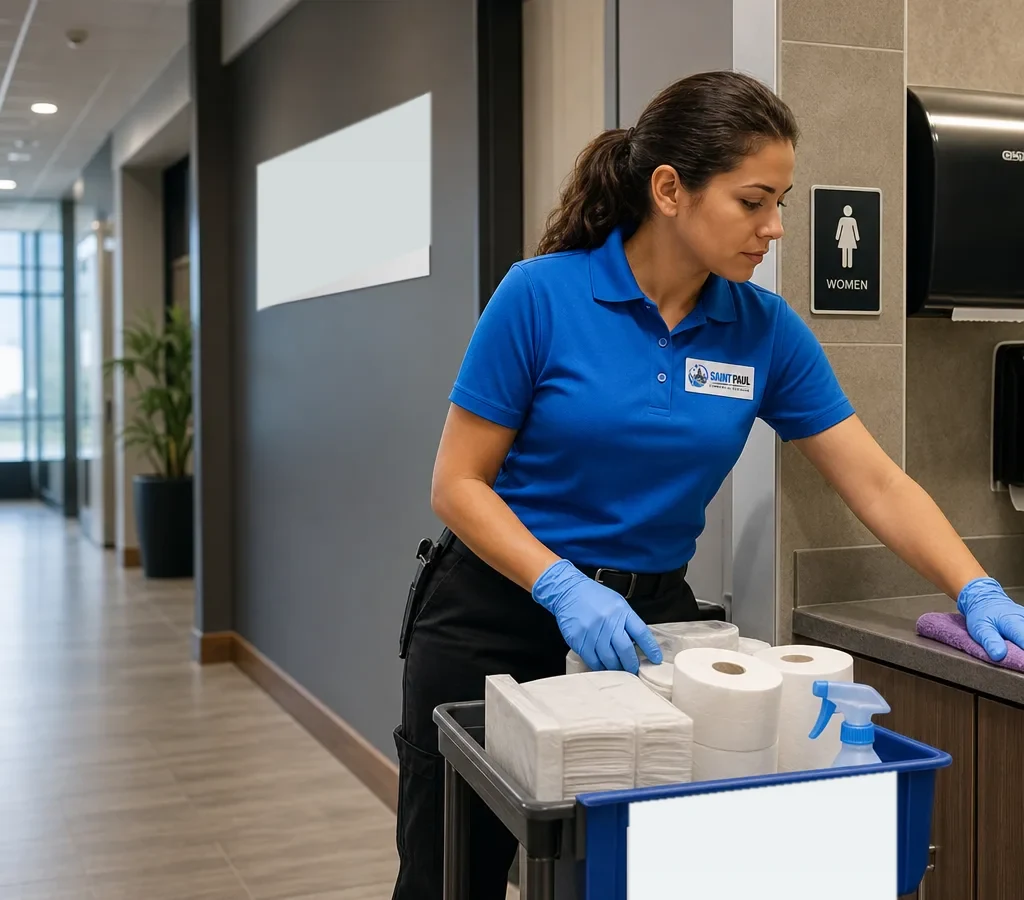
Guest restrooms are the other pressure point. Diners treat them as evidence of what the kitchen must be like, so a restroom that has not been checked since the lunch rush costs more goodwill than almost anything else on the floor. The fix is not more effort during service; it is an agreed check frequency that matches how busy the room actually gets.
Saint Paul winters add a third problem at the door. Salt, slush, and wet boots collect at entries and around waiting areas, and the mats that should catch them stop working once they are saturated. Treating entries as their own scope item, rather than part of a general sweep, keeps the first impression intact through the season.
We write each of these areas down separately, with its own tasks and timing, and record what is not included. Kitchen line work and specialist equipment stay outside the arrangement unless separately agreed, so nothing is assumed. For surface-specific work, the floor care and deep cleaning pages cover how those projects are scoped.