
Reception and visitor areas
Reception, waiting, and entry spaces are part of how an office receives people. The scope can identify the visible areas to be considered without treating private workspaces as an automatic extension of that need.
Serving Saint Paul, Minnesota & surrounding areas
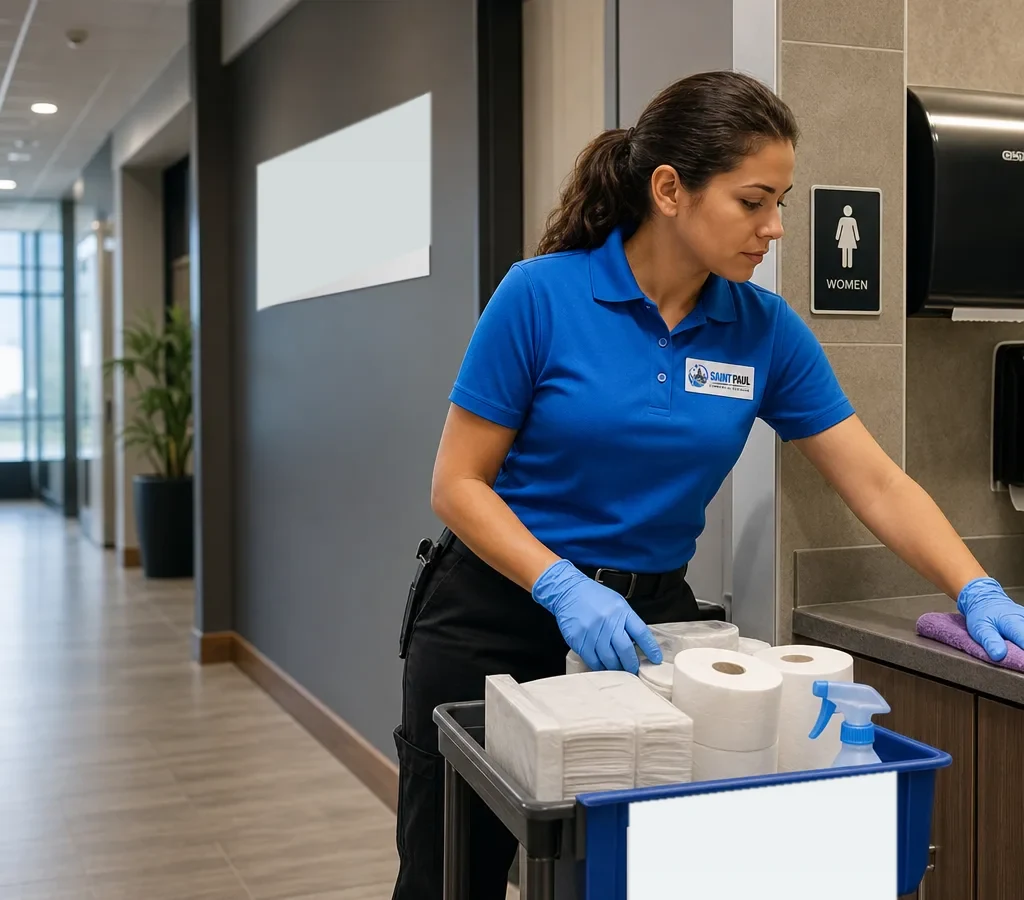
Office cleaning in Saint Paul
Office cleaning should fit the workday: agree how access works, which shared areas matter most, and when care can happen without disrupting the office.
Service overview
An office can look straightforward on a floor plan and still be difficult to clean around. Meeting rooms change use, reception sees visitors, kitchen areas collect the evidence of a busy day, and desk neighborhoods have different privacy expectations. A good office-cleaning conversation starts with those working realities instead of assuming a standard office routine will fit.
For a Saint Paul workplace, the priority is a scope that protects the workday from unnecessary disruption while giving shared spaces clear attention. The facility can identify the rooms people rely on, explain how access is handled, and describe when those spaces are available. That creates useful boundaries around agreed work areas and a more relevant estimate discussion.
The most helpful office-cleaning requests explain the work environment, not merely the square footage. A manager may know that reception needs attention before visitors arrive, that a meeting room is booked often, or that a break area sees the heaviest use. Those details point to priorities without requiring the office to prescribe a cleaning method. They also make it easier to separate regular workplace care from a deeper or surface-specific concern that needs its own scope.
Office cleaning can sit within a broader commercial-cleaning scope when the property includes more than one type of space. For a routine centered on building-wide ownership, review janitorial services. Offices with a visible floor or interior-glass concern can also raise floor care or window cleaning as separate project needs.
Request an EstimateService details
Reception, waiting, and entry spaces are part of how an office receives people. The scope can identify the visible areas to be considered without treating private workspaces as an automatic extension of that need.
Conference rooms and shared desks often change throughout the day. Discussing their use and access helps the scope account for where care is practical and what should be addressed.
These shared areas can have different priorities from the rest of the office. A clear scope names the agreed tasks and the limits of the work rather than relying on assumptions about every surface.
Restrooms, collection points, carpet, mats, and hard floors can be considered within the office routine based on the layout, traffic, and condition of the spaces involved.
A practical planning conversation
01
Start with reception, meeting rooms, break areas, restrooms, and other spaces that multiple people use or visitors see.
02
Clarify which desk areas, offices, and storage spaces are part of the agreed scope, respecting the office’s own access expectations.
03
Discuss when rooms can be accessed and how the proposed work fits around the normal workday, meetings, and changing occupancy.
04
A written plan gives the office a way to revisit priorities when rooms, shared-space use, or access arrangements change.
Common questions
Office cleaning centers on the rhythms of a workplace: shared rooms, visitor-facing areas, desk and privacy boundaries, and access around the workday. It is a focused scope within the broader commercial-cleaning conversation.
They should be addressed directly in the scope. The office can identify which areas are available, which are excluded, and any boundaries that shape the agreed work. Nothing needs to be assumed from a room label.
Yes. Those details are helpful inputs because they affect which spaces matter most and when they may be accessible. The goal is to define a routine that fits the workplace rather than interrupting it.
Share the office layout, the shared and visitor-facing areas you want considered, the current priorities, and any access or timing constraints. Mentioning a separate floor or deep-cleaning concern can also clarify the discussion. The office does not need to provide a complete task list before making contact. A plain description of how people use the space, where visitors spend time, and which rooms have the most shared activity is enough to start. Those details give the conversation a sensible focus and help distinguish the recurring office routine from a condition issue that may need separate consideration.
Request an estimate
Request an estimate
Share a few details about your commercial cleaning needs and we will follow up about the right scope for your space.