
Lobbies, Entries, And Shared Corridors
These spaces shape the first route through a building. Define the entry surfaces, corridor use, and access boundaries so care fits around the people moving through them.
Serving Saint Paul, Minnesota & surrounding areas
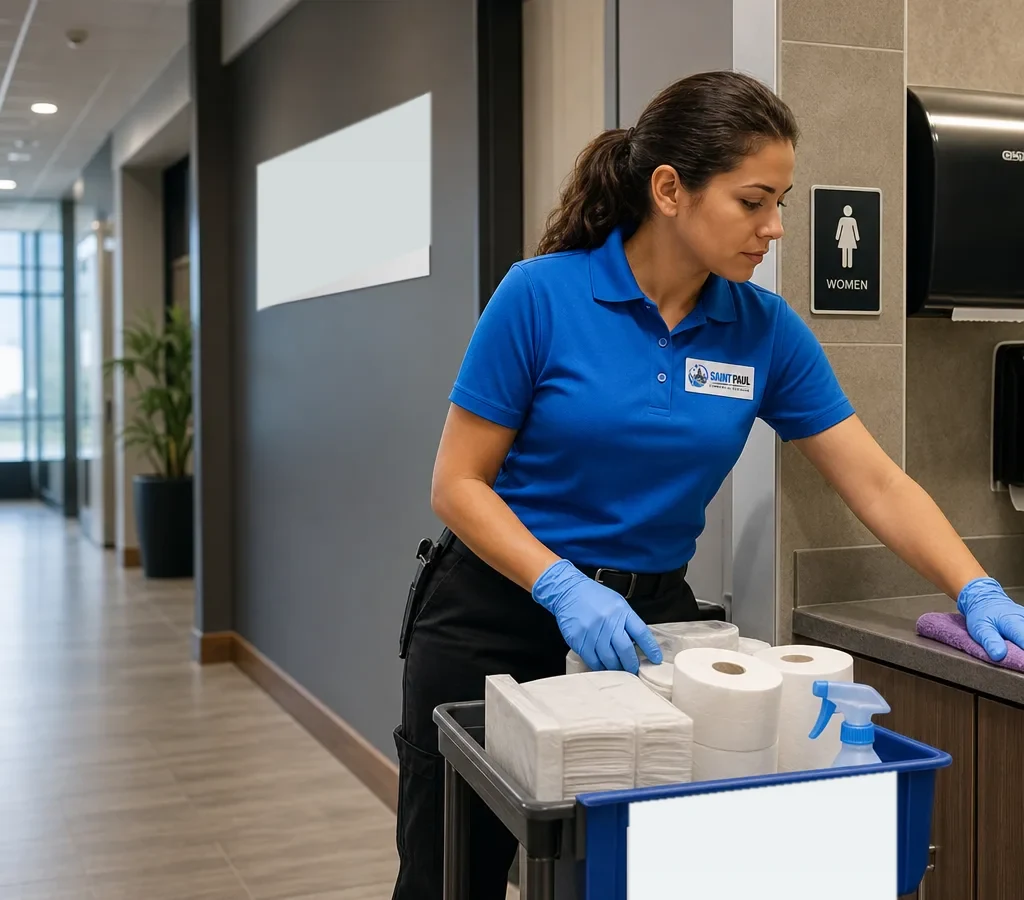
Serving Minneapolis, Minnesota
For multi-use commercial spaces, define access, shared-area priorities, and workday constraints before the cleaning scope is set.
Local service overview
Minneapolis commercial cleaning is most useful when a multi-use building’s access arrangements, shared areas, and workday constraints are defined before the scope is set. A reception area, shared corridor, tenant suite, and staff break space may all matter to the same property, but they are not used in the same way. A useful plan starts by separating those priorities rather than treating the site as one undifferentiated space.
Begin with the areas people see and use, then record the building boundaries that affect the work. That can include who can approve access, which rooms remain in use during the day, where occupants share circulation space, and whether a task belongs in recurring care or a separate project. The point is a scope the facility can discuss clearly, not a generic list of tasks.
Request an EstimateRecurring service and specialty work
Recurring care and defined projects solve different problems. Keep the routine focused on the areas that need ongoing attention, then discuss floor care, deep cleaning, interior glass work, or post-construction cleaning separately when their condition and access call for it.
These spaces shape the first route through a building. Define the entry surfaces, corridor use, and access boundaries so care fits around the people moving through them.
Shared amenity spaces need clear priorities because several occupants may rely on them. Agree what is included, when access is practical, and how the area is used during the day.
Workspaces and public-facing areas often need different timing and boundaries. Record which rooms remain occupied, which are shared, and which areas are appropriate for the agreed scope.
Surface care is easier to plan when the material, visible condition, use, and access are known. If a task sits outside recurring care, it can be discussed as a separate project.
Related services
Use the core commercial-cleaning page for a building-wide view, then choose a service page when a particular condition or area needs closer attention. The useful distinction is not the city label: it is whether the need is recurring work across the facility or a defined task with its own scope.
Industry-specific cleaning
A multi-use property can bring together office work, customer visits, shared amenities, and distinct access arrangements. Industry pages offer useful examples of how priorities change by setting, but the final scope still depends on the accessible areas and the way your own building operates.
A scoped approach
01
Start with the areas that belong to the building as a whole, then identify spaces with different occupants, uses, or boundaries.
02
Agree what needs recurring attention, which tasks are outside that routine, and which areas are not part of the accessible work zone.
03
Discuss when rooms are in use, how entry is arranged, and where normal building activity creates a practical limit on the work.
04
If a shared area, occupant pattern, or access arrangement changes, revisit the scope rather than assuming the earlier plan still fits.
Common questions
It depends on the building’s accessible areas and priorities. A scope may cover shared entries, corridors, restrooms, break spaces, offices, and customer-facing areas, but the useful starting point is which of those spaces need recurring attention and which have separate access or timing limits.
That is a scoping question, not an assumption. Explain which rooms are occupied, when shared spaces see the most use, and how building entry is handled. Those details help define a service window that respects normal activity without promising a fixed schedule before the facility is understood.
Floor care, deep cleaning, interior glass work, and post-construction cleaning can be discussed when they address a defined area or condition outside the recurring routine. The relevant service page can help frame the conversation, while the facility’s actual surfaces, condition, and access determine the scope.
Describe the type of space, the areas that matter most, how the building is used, and any known access constraints. If the need is a one-off project as well as recurring cleaning, say so. That gives the estimate conversation a practical starting point without assuming an identical plan will fit every Minneapolis facility.
Request an estimate
Request an estimate
Share a few details about your commercial cleaning needs and we will follow up about the right scope for your space.