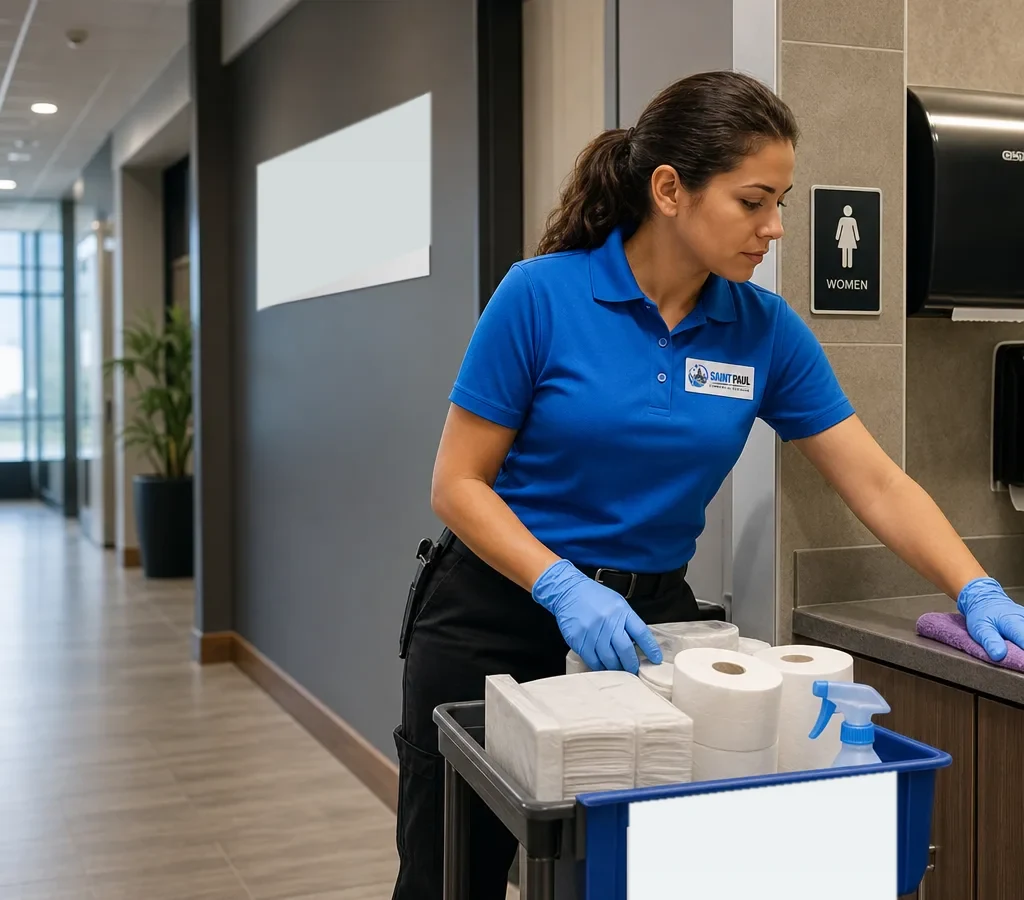
Commercial cleaning technician in a Saint Paul workplace

Commercial cleaning in Saint Paul

Commercial Floor Care Saint Paul

Commercial floor care in Saint Paul for hard floors, carpeted areas, entry mats, and high-traffic spaces. Plan service around surface type, use, and appearance goals.

Service overview

Floor Care for High-Traffic Commercial Spaces

Floors show the effect of foot traffic, weather, carts, spills, and daily use. We help Saint Paul facilities plan care that reflects the materials underfoot and the way people move through the building.

The useful approach is not one treatment for every surface. It separates routine vacuuming and mopping from periodic projects, while giving entryways and traffic lanes the attention they need.

Request an Estimate

Service details

What the Scope Can Include

Hard-Surface Dust Mopping And Damp Mopping

Hard floors lose their finish in the traffic lanes long before the edges show it. Regular dust and damp mopping on the right cadence keeps that wear even instead of leaving obvious paths through the building.

Carpet And Walk-Off Mat Vacuuming

Carpet holds the grit that gets walked in, and walk-off mats stop working once they are saturated. Vacuuming both on a set rhythm is what keeps the soil from grinding into the fibre.

Entryway Attention For Grit And Moisture

Entryways take the worst of Minnesota weather. Salt, melt water, and grit collect here first, and handling them deliberately protects every floor surface further inside the building.

Spot Care For Marks And Traffic Lanes

Marks and scuffs in traffic lanes are what people actually notice underfoot. Spot care between full services keeps a floor looking maintained rather than waiting for the next deep clean.

A defined process

How the Service Plan Comes Together

01

Walk the site

We walk the site and look at the floors in use: where the traffic lanes run, which entries carry the most grit, and which surfaces are already showing wear.

02

Set the written scope

You get the plan in writing, naming each floor type, the tasks it needs, and how often. Different surfaces get different treatment rather than one blanket routine.

03

Prepare the starting condition

If a floor needs a reset before a routine makes sense, we handle that first so the ongoing plan starts from a fair baseline instead of fighting old build-up.

04

Review the plan

We review the plan as the seasons change. Winter grit and summer traffic put very different demands on the same floor, and the schedule should move with them.

Where This Service Fits

  • ✓Office properties with lobby, corridor, and kitchen flooring.
  • ✓Retail locations where floors shape the first impression.
  • ✓Medical and professional suites with mixed floor surfaces.
  • ✓Multi-tenant buildings with common areas and busy entrances

Common questions

Commercial Floor Care Saint Paul: FAQs

What is included in the service scope?+

The scope names each floor type and what it needs: dust and damp mopping, vacuuming, entry matting, and spot care in traffic lanes, each with its own frequency.

How often can service be scheduled?+

It depends on the surface and the traffic it carries. High-use entries and corridors usually need more frequent attention than low-traffic areas, and the plan reflects that difference.

Can the plan work around building access and operating hours?+

Yes. We set the service window around your operating hours, whether that means before opening, after close, or a quieter stretch when floors can dry without disruption.

What information helps with an estimate?+

Tell us the floor types, the approximate area, what condition they are in now, and when we can get in. That is enough to scope the work properly.

Plan around the actual condition

Start With the Floors People Notice and Use

Floor care is easier to discuss when the condition is described before a list of tasks is chosen. A scuffed corridor, a dull entry, carpet in a heavily used waiting area, and a back-office floor do not create the same concern or need the same attention. The useful first step is to identify the areas that are visible, heavily used, or showing a condition the facility wants addressed.

In a Saint Paul commercial space, that conversation can separate surfaces by material, use, and location. Hard floors, carpeted rooms, walk-off mats, and transitions between them can be listed individually. It also helps to note whether the concern is appearance, tracked-in debris, marks, uneven attention between areas, or a buildup that routine work has not reached. Clear descriptions keep a floor-care request tied to the problem rather than a generic package.

Traffic matters because it changes the priority, not because every part of the building needs the same treatment. Entries, reception paths, shared corridors, break areas, and public-facing rooms may deserve a different level of attention than low-use spaces. Access also matters: a service plan needs to account for the areas available for work and the times the building can accommodate it.

Floor care can sit within a broader commercial cleaning scope, or it can be discussed as a focused condition issue. When the concern extends beyond the floor to neglected edges, fixtures, or shared rooms, a deep-cleaning project may be the more relevant conversation. Customer-facing retail spaces may also need priorities that account for entries and common areas.

A useful estimate request names the surface areas, what is visibly happening, any access limits, and the outcome the facility wants to discuss. That gives Saint Paul Commercial Cleaning a practical starting point without assuming a method, timetable, or result before the scope is defined. Use the contact page to describe the building and the floor-care concern.

Request an estimate

Discuss floor care for your Saint Paul facility.

Request an Estimate

What usually goes wrong

Why Commercial Floors Wear Unevenly

Most floor problems in Saint Paul buildings are not dirt, they are abrasion. Grit that comes through the door acts like sandpaper underfoot, and the traffic lanes take the damage first. That is why a floor can look acceptable at the edges and visibly tired down the middle of a corridor within a single winter.

Walk-off matting is the part most plans underuse. Mats work until they are saturated, and after that they hold grit at the entrance and release it back onto the floor. Managing matting as part of the schedule, rather than treating it as furniture, does more for the rest of the building than any amount of extra mopping further in.

The other common mistake is treating every surface the same. Hard floors, carpet, and entry matting need different attention on different cadences, and a single blanket routine tends to over-serve the quiet areas while under-serving the ones that carry the traffic. Naming each surface separately is what keeps the effort where it matters.

We scope by surface and by traffic, set a frequency for each, and handle any reset that is needed before the routine starts. Where a building also needs periodic detail work, the deep cleaning page explains how that is planned as a separate project.

Request an estimate

Tell Us About Your Facility

Share a few details about your commercial cleaning needs and we will follow up about the right scope for your space.