
Showroom Floors, Entry Glass, And Customer Seating
A showroom lives or dies on presentation. Glass doors covered in handprints, dull floors under the lighting, and seating that looks used all work against the vehicles you are trying to sell.
Serving Saint Paul, Minnesota & surrounding areas
Industry-specific cleaning in Saint Paul
Auto dealership cleaning in Saint Paul for showrooms, customer areas, offices and agreed accessible spaces. Define priorities around public presentation, access and the facility's operating day.
Industry overview
Dealership cleaning works best when showroom presentation, customer touchpoints and agreed accessible areas are treated as separate priorities within one facility. The front of the building often needs a clear standard because it frames a visitor's arrival, while waiting areas, restrooms and offices have their own patterns of use. A useful scope starts by identifying which areas are public-facing, which are shared by staff and customers, and which fall outside the agreed work area.
That distinction prevents a generic task list from blurring the practical boundaries of a dealership. The conversation can cover showroom floors, entry glass, lounge seating, restrooms, offices and accessible common areas, together with the times those spaces can be made available. Service departments and other restricted work areas are not assumed to be included. The result is a written scope that gives the facility a way to discuss presentation and access without making unsupported claims about specialist automotive work.
Request an EstimateScope and tasks
A showroom lives or dies on presentation. Glass doors covered in handprints, dull floors under the lighting, and seating that looks used all work against the vehicles you are trying to sell.
The service lounge is where customers wait with nothing to do but look around. Coffee rings, crowded bins, and tired seating get noticed during a long wait more than anywhere else in the building.
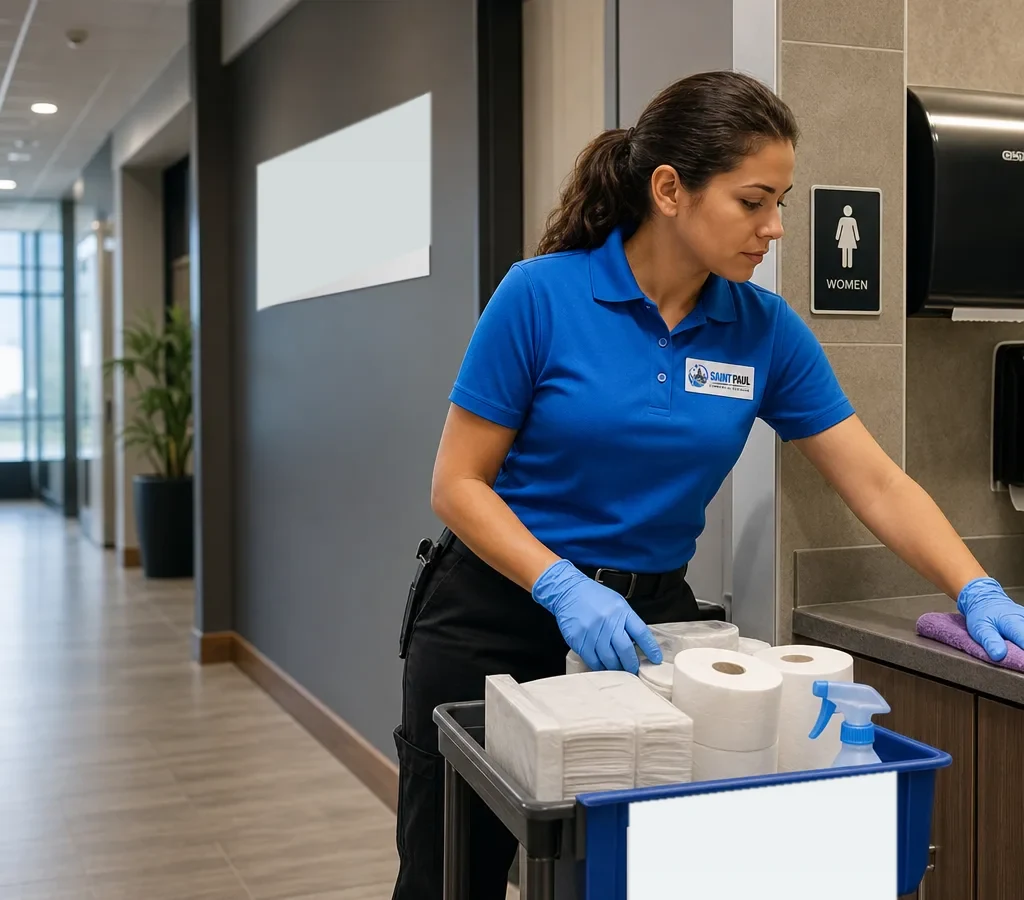
Restrooms are the one space every customer judges and no dealership wants complaints about. Fixtures, mirrors, dispensers, and the corners that get skipped are all named in the scope.
Offices, break areas, and waste points are easy to defer when the front of house is busy. Setting their frequency in advance stops them becoming the thing staff quietly work around.
A practical process
01
We walk the dealership with you and note what is actually going wrong: the entry glass that never stays clean, the lounge that looks tired by mid-afternoon, the areas nobody has clearly owned.
02
You get the plan in writing, covering the showroom, customer spaces, and agreed accessible areas with named tasks and frequencies. Restricted service work stays outside the scope unless separately agreed.
03
We agree when crews can be on site so cleaning happens around sales hours and service appointments rather than in front of waiting customers.
04
We revisit the plan as seasons and traffic change. Winter salt through the showroom entry is a different problem from a slow August, and the scope should reflect that.
Common questions
We start with what is going wrong now, not a standard list. The scope names the showroom, customer areas, restrooms, and agreed accessible spaces, with the tasks and frequency for each.
Yes. Cleaning in front of waiting customers creates a worse impression than the mess did. We set the service window around your sales and service hours.
Access is agreed up front and written into the scope: which areas are available, what keys or codes apply, and which service or restricted spaces stay outside the arrangement.
Tell us the size of the showroom and lounge, what is not working now, when we can get in, and whether you need ongoing service or a one-off reset. That is enough to scope it.
Request an estimate
What usually goes wrong
Dealership cleaning rarely fails because nobody is cleaning. It fails because the front of house and the working areas get judged by different standards, and only one of them is scheduled properly. A showroom can be vacuumed on a routine while entry glass, seating, and the service lounge drift, because no one agreed who owns them or how often they need attention.
Minnesota weather makes that gap obvious. Salt and melt water come through the customer entrance all winter, so floors and thresholds that looked fine in October start working against the vehicles on display. Handling entries deliberately, rather than as part of a general pass, is what keeps the showroom presenting the way you intend.
The other common problem is the waiting customer. Someone sitting in the service lounge for an hour has nothing to do but examine the room. Full bins, coffee rings, and a restroom that has not been checked since morning shape their opinion of the dealership more than the repair itself. Those spaces need a frequency that matches how long people actually sit in them.
Our approach is to name each of those areas separately, with its own tasks and timing, and to write down what stays outside the scope. Restricted service bays and specialist automotive work are excluded unless separately agreed, so nobody assumes coverage that was never discussed. Related pages on floor care and window cleaning cover the surface-specific work in more detail.
Request an estimate
Share a few details about your commercial cleaning needs and we will follow up about the right scope for your space.