
Employee and visitor areas
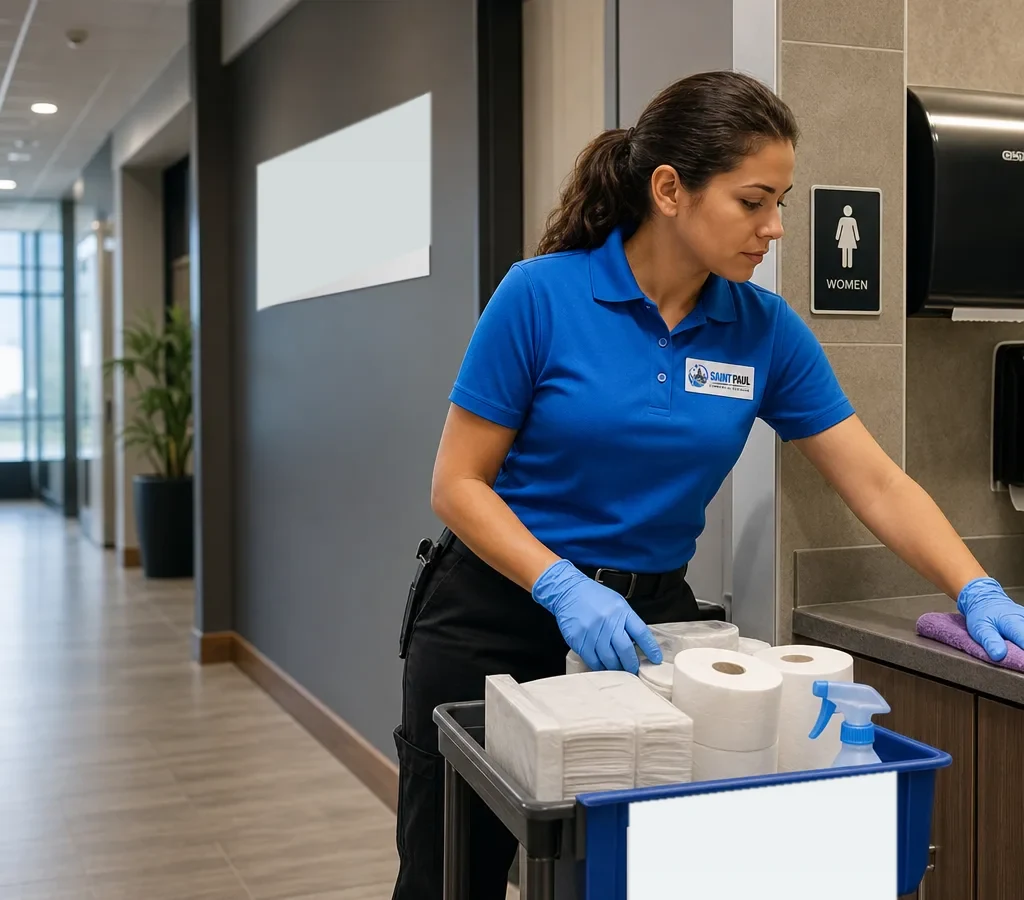
Break rooms, restrooms, entrances and other agreed spaces can be listed separately so everyday use is reflected in the scope.
Serving Saint Paul, Minnesota & surrounding areas
Commercial cleaning in Saint Paul
Industrial cleaning must start with operating boundaries: agree the accessible areas, surface conditions and timing before defining any work.
Service overview
An industrial workplace is not a generic commercial interior. Operations, access limits and changing activity affect which areas are available, what surfaces need attention and when work can take place. A useful conversation starts with those limits rather than a broad promise about the entire site.
For Saint Paul facilities, the practical question is not whether every part of a property can be included. It is which agreed, accessible areas need commercial cleaning support, how those areas are used and what boundaries keep the scope clear. That distinction helps a facilities or operations manager compare proposals on the work actually requested.
Request an EstimateService details
Break rooms, restrooms, entrances and other agreed spaces can be listed separately so everyday use is reflected in the scope.
Floor areas need to be identified by surface, condition and access. Work is defined around the areas made available, not assumed across operations.
Offices, meeting areas and reception points often have different traffic and access requirements from operational areas.
The scope can distinguish ordinary accessible surfaces from machinery, process areas, hazardous materials or any work requiring another specialist.
A defined process
01
Identify the parts of the site that are available for discussion and note areas that are outside the proposed work.
02
Record entry arrangements, occupied periods and the service windows the facility can make available.
03
Separate employee, administrative, entry and floor priorities so the estimate has a usable basis.
04
Check that tasks, exclusions and practical access details match the facility before work is arranged.
Planning notes
A site may have areas that are open at one point in the day and unavailable at another. Recording entry points, escorted access, occupied zones and the locations that stay out of scope prevents a general cleaning request from creating an impractical expectation later.
Concrete, resilient flooring, carpeted offices and entry mats do not need to be treated as one category. The manager can describe the visible condition and the intended result for each accessible area, then decide whether routine care or a separate floor-care project is the better fit.
Cleaning support must sit alongside the facility’s own operating decisions. The discussion can identify the work areas made available, but it should not presume responsibility for machinery, production processes, regulated materials, specialist shutdown work or safety decisions controlled by the facility.
A clear record of included locations, tasks, access notes and exclusions gives operations and facilities teams a shared reference. If the site changes, that record makes it easier to revisit the relevant boundary rather than treating an earlier description as a permanent instruction.
Common questions
The scope should name only the areas made available for commercial cleaning. Process areas, machinery, hazardous materials and specialist requirements are not assumed.
A description of the accessible areas, surfaces, traffic, present condition, entry arrangements and workable timing gives the conversation a practical starting point.
Floor needs can be described by location, surface and condition. For a focused project, see the commercial floor care page before combining it with recurring work.
If access or priorities change, the written scope is the place to revisit the agreed areas and tasks. It is better to update that conversation than rely on an old assumption.
Before requesting an estimate, gather the practical details that shape the conversation: the accessible locations, surface conditions, present priorities, entry arrangements and operating periods. It is equally useful to identify what is not included, especially machinery, process work, regulated materials and spaces the facility cannot make available. That preparation keeps the discussion tied to commercial cleaning support for the areas actually agreed.
Request an estimate
Related services: Commercial cleaning · Commercial floor care · Deep cleaning
Request an estimate
Share a few details about your commercial cleaning needs and we will follow up about the right scope for your space.