
Entry And Check-In Areas, Glass, And Walk-Off Mats
Entry and check-in areas set the tone before a member reaches the floor. Glass, counters, and walk-off mats take constant contact and show it quickly, especially through a Minnesota winter.
Serving Saint Paul, Minnesota & surrounding areas
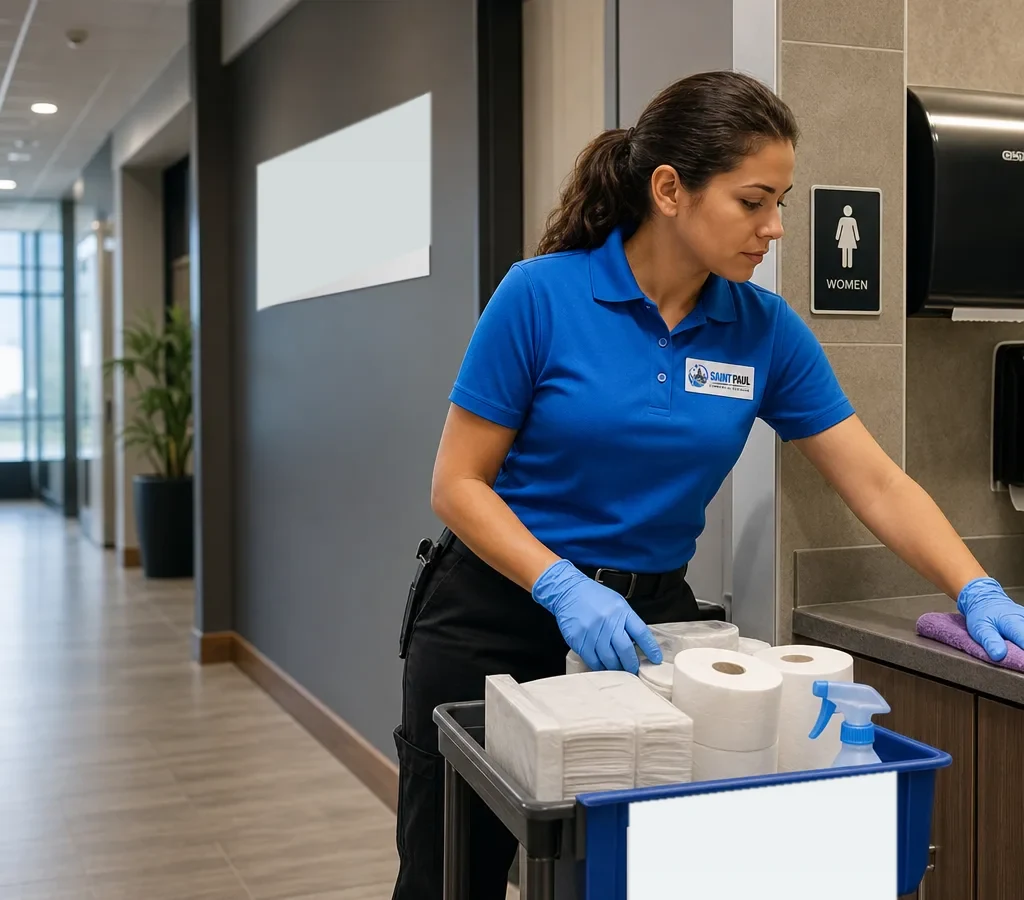
Industry-specific cleaning in Saint Paul
Fitness center and gym cleaning in Saint Paul for guest-facing common areas and agreed accessible spaces. Plan priorities around member traffic, access, and the time available for care.
Industry overview
Gym cleaning begins with the way members move through the facility. An entry, check-in point, shared corridor, restroom or locker-adjacent common area may see different levels of use at different points in the day. A useful commercial cleaning conversation names those areas first, then separates the ones that need recurring attention from areas that need a separate project or are outside the agreed scope.
That distinction matters because a gym is not one open room. The manager needs a plan that respects normal member use without assuming access to every studio, staff space or piece of equipment. The starting point is practical: which guest-facing spaces are accessible, what materials are present, where traffic concentrates, and when the facility can make an area available. From there, the work can be organized around clear priorities rather than a generic description of gym cleaning.
Request an EstimateScope and tasks
Entry and check-in areas set the tone before a member reaches the floor. Glass, counters, and walk-off mats take constant contact and show it quickly, especially through a Minnesota winter.
Restrooms and locker-room common areas are where members judge a facility hardest. Fixtures, floors, and the edges around fittings need a frequency that matches how heavily they are used.
Studios and shared common spaces carry high-contact touchpoints: door handles, rails, ledges, and surfaces members reach for between sets. These need visible, repeated attention.
Staff areas, waste points, and agreed break rooms get deferred whenever the floor is busy. Setting their cadence in advance keeps them from becoming the space nobody wants to use.
A practical process
01
We walk the facility during a normal day and see where the pressure actually falls: the entry after a class empties, the restroom mid-evening, the areas that never quite recover.
02
You get the plan in writing, naming member-facing areas and agreed accessible spaces with tasks and frequencies. Equipment servicing and specialist work stay outside the scope unless agreed.
03
We agree when crews can work, so cleaning fits around class schedules and peak hours instead of competing with members for the same space.
04
We revisit the plan as membership patterns shift. A January intake and a quiet August put very different demands on the same rooms.
Common questions
We start with what is going wrong now, not a standard list. The scope names entries, restrooms, locker-room common areas, studios, and agreed staff spaces, with frequency for each.
Yes. Cleaning around members during peak hours is slow and visible. We set the service window around your busiest periods, whether that means early morning, late evening, or overnight.
Access is agreed up front and written into the scope: which areas are available, what entry arrangements apply, and which spaces stay outside the arrangement.
Tell us the size of the facility, which areas concern you most, your busiest hours, and whether you need recurring service or a one-off reset. That is enough to scope it.
Request an estimate
What usually goes wrong
Fitness facilities have a cleaning problem that is really a timing problem. A single overnight visit leaves the building spotless at opening and steadily worse across the day, and members experience the second half of that curve. By evening the restrooms, entry, and high-contact surfaces are carrying the whole day's use.
Members also judge a gym on a narrow set of spaces. Locker-room common areas and restrooms carry disproportionate weight, and complaints about them arrive faster and louder than about anything else in the building. Scoping those areas with their own frequency, rather than folding them into a general pass, is usually the single biggest improvement available.
Winter adds pressure at the door. Salt and melt water come in on every pair of shoes, saturate the walk-off matting, and then travel onto studio and common-area floors. Managing entry matting deliberately protects surfaces well beyond the entrance.
We name the member-facing areas, agree how often each is addressed, and set the service window around your peak hours rather than against them. Equipment servicing and specialist work stay outside the scope unless separately agreed, so nothing is assumed. Where a facility needs a periodic reset, the deep cleaning page explains how that is planned.
Request an estimate
Share a few details about your commercial cleaning needs and we will follow up about the right scope for your space.