
Reception and waiting areas
Public arrival and waiting spaces can be prioritized by use, access and the time the facility makes them available.
Serving Saint Paul, Minnesota & surrounding areas
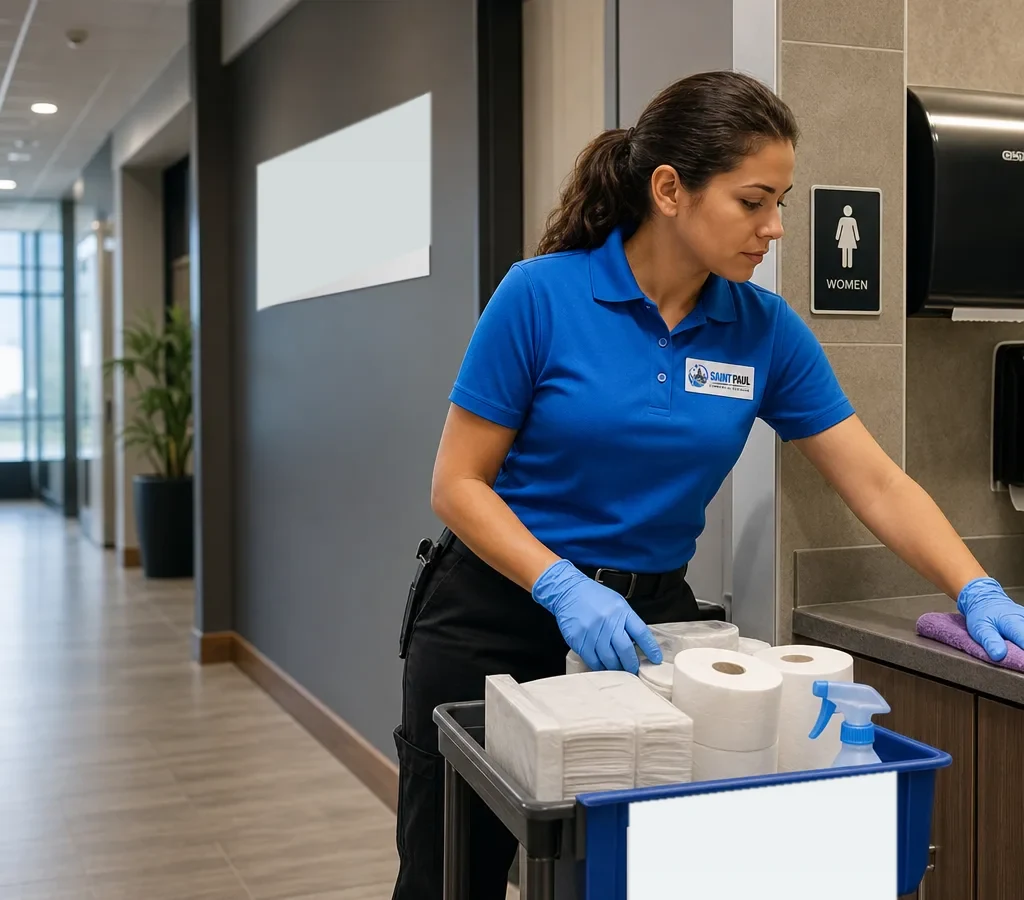
Industry-specific cleaning in Saint Paul
For a medical facility, commercial cleaning can be scoped around agreed public and administrative areas, with access boundaries clear from the outset.
Service overview
A medical facility has public-facing and administrative spaces that need to look orderly through the day. The useful starting point is a precise one: agree which non-clinical areas are available, how they are used and when they can be accessed. That produces a commercial-cleaning scope rather than an assumption about care areas.
This page is for administrators planning support for agreed waiting, reception, restroom, office and common areas. It does not describe clinical cleaning, infection control, patient care, sterilisation, regulatory compliance or work in restricted treatment spaces. Those boundaries belong in the first discussion, not in small print after an estimate.
Request an EstimateService details
Public arrival and waiting spaces can be prioritized by use, access and the time the facility makes them available.
Offices, shared work areas and staff-administrative spaces can be listed separately from clinical or restricted rooms.
Agreed restrooms, corridors and other accessible shared spaces can be described by location and practical access requirements.
Entry points and other visible accessible surfaces can be included when the facility identifies them as part of the requested scope.
A defined process
01
Start with public and administrative locations that the facility is prepared to include in a commercial cleaning discussion.
02
Clinical, treatment, storage and other controlled areas are not assumed. The facility can identify any areas outside the scope.
03
Appointment activity, visitors and staff movement affect when agreed spaces can be available.
04
Review the list of areas, tasks and exclusions so the proposal reflects the boundaries discussed.
Planning notes
Not every waiting or arrival space has the same pattern of use. The facility can identify which entries, reception zones, corridors, restrooms and common spaces are part of the requested commercial-cleaning discussion, then state the present priorities for each agreed area.
Administrative spaces may be occupied for much of the day or may only be available at limited times. Naming those conditions gives the facility an opportunity to set practical boundaries without suggesting access to records, confidential information or restricted clinical spaces.
This is not a substitute for a clinical protocol or a compliance program. The page does not represent medical-grade products, infection-control methods, sterilisation or regulatory outcomes. When those matters are relevant, they remain outside the commercial-cleaning scope described here.
The strongest request is usually specific: which agreed areas need attention, what access is available, what is excluded and which practical priorities come first. That creates a useful basis for an estimate conversation without overstating what ordinary commercial cleaning is intended to do.
Common questions
No. The scope described here is limited to agreed accessible public and administrative areas. It makes no promise about clinical spaces, infection control, sterilisation or patient care.
Reception, waiting areas, accessible restrooms, offices, entries and common spaces are useful examples when the facility confirms they are available for the requested discussion.
The facility can state which areas are accessible and when. No access to records, clinical rooms or controlled spaces is presumed.
Medical office cleaning focuses on appointment flow, reception and agreed administrative work areas in an office setting. This page addresses a broader facility conversation while keeping the same non-clinical limits.
Before requesting an estimate, identify the public and administrative areas that can be discussed, the periods when access is available and the locations that remain outside the request. A simple list of reception, waiting, restroom, entry, office and common-area priorities gives the conversation a clear basis. It also keeps clinical spaces, patient care, infection-control and compliance questions outside a page that does not claim to address them.
Request an estimate
Related services: Medical office cleaning · Office cleaning · Commercial cleaning
Request an estimate
Share a few details about your commercial cleaning needs and we will follow up about the right scope for your space.