
Entries and shared circulation
Entries, halls, lobbies, and other common paths often shape a visitor’s first impression. A useful scope identifies which of these spaces are shared, how they are used, and when they are accessible.
Serving Saint Paul, Minnesota & surrounding areas
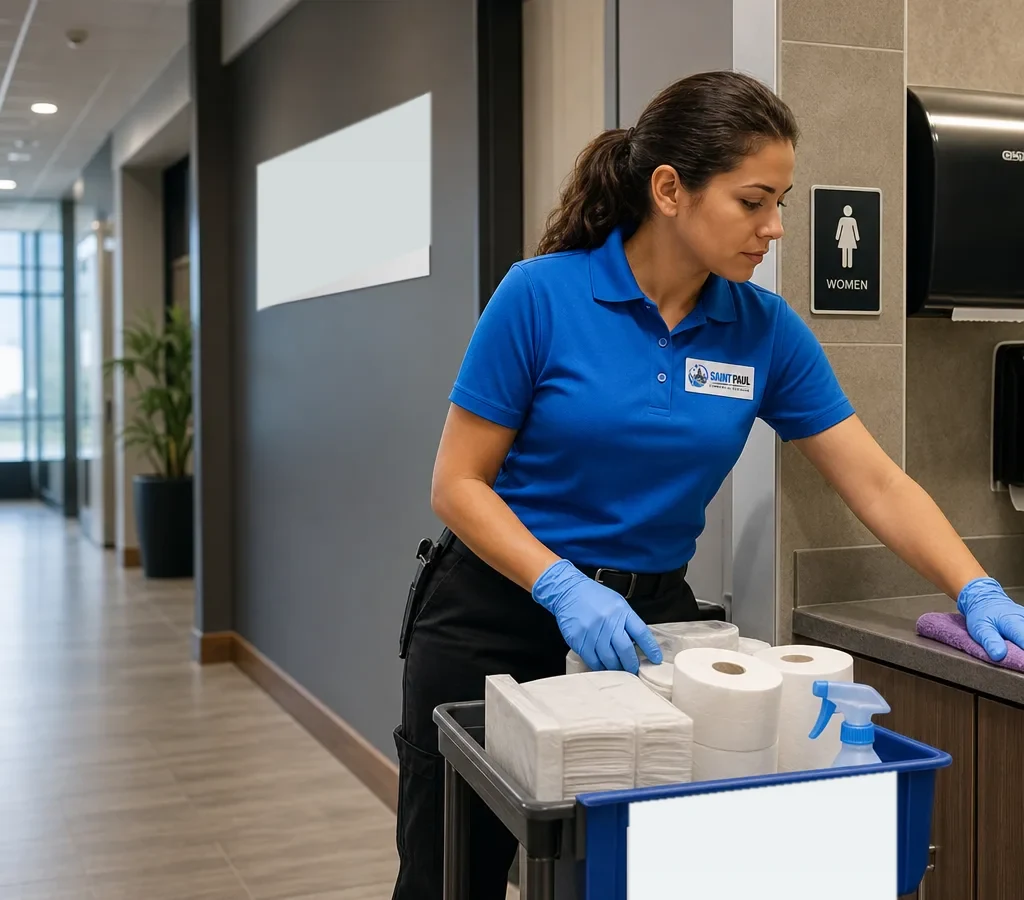
Commercial cleaning in Saint Paul
Commercial cleaning works better when recurring care is organized around the areas people use, the timing the building allows, and standards the facility can review.
Service overview
When cleaning is treated as a loose collection of tasks, the result is often uneven. An entry may get attention while a shared corridor is left out of the conversation. A restroom may be listed, but nobody has agreed how its use, access, or condition affects the work. For a Saint Paul commercial property, the useful starting point is not a generic package. It is a clear view of the building.
Commercial cleaning can bring common areas, workspaces, restrooms, and customer-facing zones into one recurring scope. The scope should identify the areas that matter, distinguish ongoing care from a defined project, and give the facility a practical standard to discuss. That makes the estimate conversation about the actual property, not assumptions about it.
That building-wide view also helps a manager avoid asking one service to solve every condition problem. A space with traffic-worn floors, neglected interior glass, or accumulated buildup may need a focused project in addition to recurring care. Calling out those conditions does not commit the facility to a particular service. It gives the estimate conversation the detail needed to decide whether the issue belongs in the routine, a separate discussion, or both. The result is a scope that can be read alongside the building’s actual use.
For recurring responsibilities focused on daily building care, see janitorial services in Saint Paul. Facilities that need a workplace-focused discussion can also explore office cleaning. When a condition issue is the main concern, commercial floor care, interior glass cleaning, or deep cleaning can be considered as defined projects.
Request an EstimateService details
Entries, halls, lobbies, and other common paths often shape a visitor’s first impression. A useful scope identifies which of these spaces are shared, how they are used, and when they are accessible.
Office areas, reception spaces, retail floors, and other visible zones can have different priorities. Naming those priorities prevents the scope from treating every room as if it serves the same purpose.
These spaces are part of daily building use, but their needs vary by layout, traffic, and access. The discussion should define agreed tasks and boundaries instead of relying on a vague room label.
A recurring scope is not the same as a floor-care, interior-glass, or deep-cleaning project. Separating those needs early helps the facility describe the work it wants considered.
A practical planning conversation
01
Describe the property’s shared areas, workspaces, visible zones, and any locations that need special consideration in the scope conversation.
02
Identify the areas that see regular traffic or matter most to occupants and visitors, without assuming identical care across the property.
03
Talk through when spaces are available and any access limits that affect how the work can be arranged.
04
Use the proposed scope to confirm what is included, what is outside the recurring plan, and which needs belong to a separate project.
Common questions
The answer starts with the building, not a preset list. Useful details include the areas to be considered, their use and condition, access limits, timing preferences, and which tasks are intended as recurring care.
Recurring commercial cleaning addresses the agreed ongoing scope. If a facility is also considering floor care, interior glass cleaning, or a deeper reset, those can be discussed as separate needs rather than folded into an unclear routine.
It can be organized around the distinct parts of a property, such as shared circulation, work areas, reception, restrooms, and customer-facing zones. The point is to make those priorities explicit before the estimate is prepared.
A short description of the facility, its priority spaces, current concerns, and access or timing constraints gives the conversation a useful starting point. You can also note whether the need is ongoing, project-based, or both. It is helpful to separate the spaces used by visitors from those used only by staff, then identify the areas where recurring attention matters most. If the facility has a concern about a particular surface or condition, include that concern in the request without assuming its solution. The purpose of the first conversation is to make the building’s priorities visible so the proposed scope has clear limits, useful detail, and a practical relationship to how the property operates.
Request an estimate
Request an estimate
Share a few details about your commercial cleaning needs and we will follow up about the right scope for your space.