
Accessible rooms and surfaces
List the rooms, entries, common areas and surfaces available for final cleaning so the project boundary is explicit.
Serving Saint Paul, Minnesota & surrounding areas
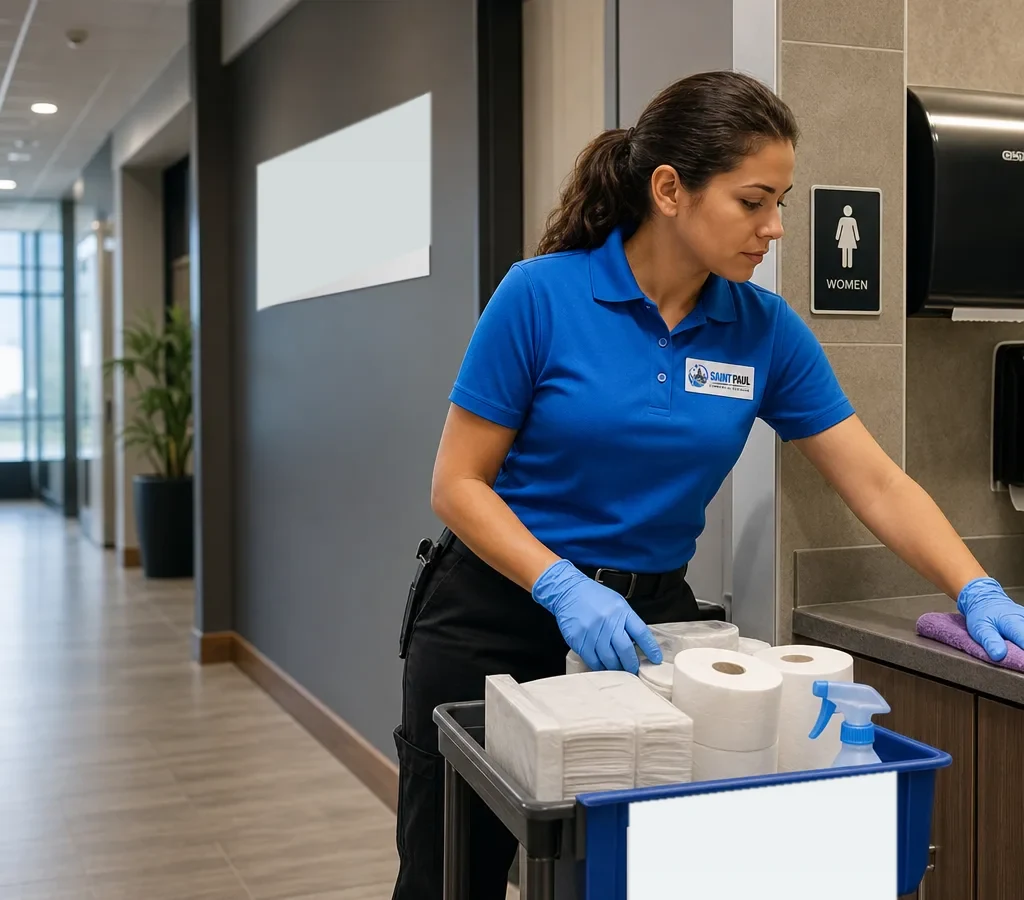
Commercial cleaning in Saint Paul
Post-construction cleaning starts with a handoff-ready scope: identify the accessible areas, remaining dust or debris and the condition expected before occupancy.
Service overview
A commercial project can look nearly finished while dust, residue and loose debris remain in the areas meant for handoff. The useful next step is not a blanket promise that a site is ready. It is a specific conversation about the accessible areas, what remains to be addressed and the level of final cleaning the project owner or manager wants documented.
Post-construction cleaning is different from routine janitorial care. It is a project-based scope tied to the present condition of an accessible space. The conversation should also identify exclusions, trades that still need access and work that belongs with another specialist, rather than treating every unfinished detail as a cleaning task.
Request an EstimateService details
List the rooms, entries, common areas and surfaces available for final cleaning so the project boundary is explicit.
Describe the remaining dust, residue or project-related condition that needs attention in the agreed accessible locations.
Identify what can be addressed within the cleaning scope and what remains a disposal, trade, hazardous-material or specialist responsibility.
Clarify the areas that need attention first for the project handoff conversation, without treating that as a completion or occupancy guarantee.
A defined process
01
Walk through the accessible areas and describe what remains, including dust, residue and project-related debris.
02
Note unfinished trade work, disposal needs, hazardous materials and specialist tasks that do not belong in the agreed cleaning scope.
03
Prioritize the accessible areas that matter most to the handoff discussion and the order in which they can be made available.
04
Put the agreed areas, tasks and boundaries in writing so the final-clean work is not asked to cover unrelated project responsibilities.
Planning notes
A final-clean conversation benefits from an honest view of the accessible rooms, surfaces and visible residue. Listing the current condition gives the project manager a basis for priorities without implying that cleaning can resolve unfinished construction, defects or tasks still owned by another trade.
If contractors still need access, the project can identify which areas are available now and which should wait. A sequence based on actual access is more useful than an assumed completion date or a promise that every space will be ready at the same time.
Disposal, hazardous materials, heavy debris, repairs, specialized surface work and permit matters are not automatically commercial-cleaning tasks. Identifying them early helps the project team keep the final-clean request proportionate to the agreed accessible areas.
The project owner or manager decides whether the overall condition meets its handoff needs. A defined cleaning scope can address agreed tasks, but it does not certify the project, guarantee occupancy or replace the review expected from the owner, contractor or other responsible party.
Common questions
No. The scope addresses agreed accessible cleaning tasks. It does not guarantee construction completion, permit closeout, occupancy readiness or handoff approval.
Describe the accessible rooms, surfaces, remaining dust or debris, present condition, other trades still working and the priorities for the final-clean discussion.
That depends on the defined scope. Disposal, hazardous materials and work requiring another specialist are not assumed to be part of commercial cleaning.
Yes. A final-clean conversation can identify whether commercial floor care or interior window cleaning needs its own defined project scope.
Before requesting an estimate, identify the accessible rooms, current surface condition, remaining visible dust or debris and areas still occupied by other trades. It helps to separate cleaning priorities from disposal, repairs, hazardous materials and unfinished construction responsibilities. With that information, a project manager can discuss the specific final-clean tasks needed for the agreed areas without presenting cleaning as a guarantee of project completion or occupancy.
Request an estimate
Related services: Deep cleaning · Commercial floor care · Commercial window cleaning
Request an estimate
Share a few details about your commercial cleaning needs and we will follow up about the right scope for your space.