
Reception Desks, Waiting Areas, And Entry Glass
Reception and waiting areas are where a guest decides what kind of place this is, often while sitting still with nothing else to look at. Entry glass and seating carry that judgement.
Serving Saint Paul, Minnesota & surrounding areas
Industry-specific cleaning in Saint Paul
Salon and spa cleaning in Saint Paul for reception, guest areas, and agreed accessible spaces. Set priorities around appointment flow, access windows, and the presentation of the space.
Industry overview
Salon and spa cleaning works best when it follows the appointment flow rather than treating the whole premises as available at once. A guest may move from the entry to reception, a waiting area, a restroom and other shared spaces while staff are managing appointments nearby. The cleaning scope needs to identify which guest-facing areas matter most, when they can be accessed, and where the boundary sits between common areas and spaces not included in the work.
This is a planning exercise, not a promise about specialist treatment spaces, tools or procedures. The useful details are the presentation areas, floor surfaces, mirrors, entry glass, accessible restrooms and agreed waste points, together with the times when those areas can be attended. Setting those priorities in writing gives the owner a clearer basis for discussing commercial cleaning around the rhythms of the business.
Request an EstimateScope and tasks
Reception and waiting areas are where a guest decides what kind of place this is, often while sitting still with nothing else to look at. Entry glass and seating carry that judgement.
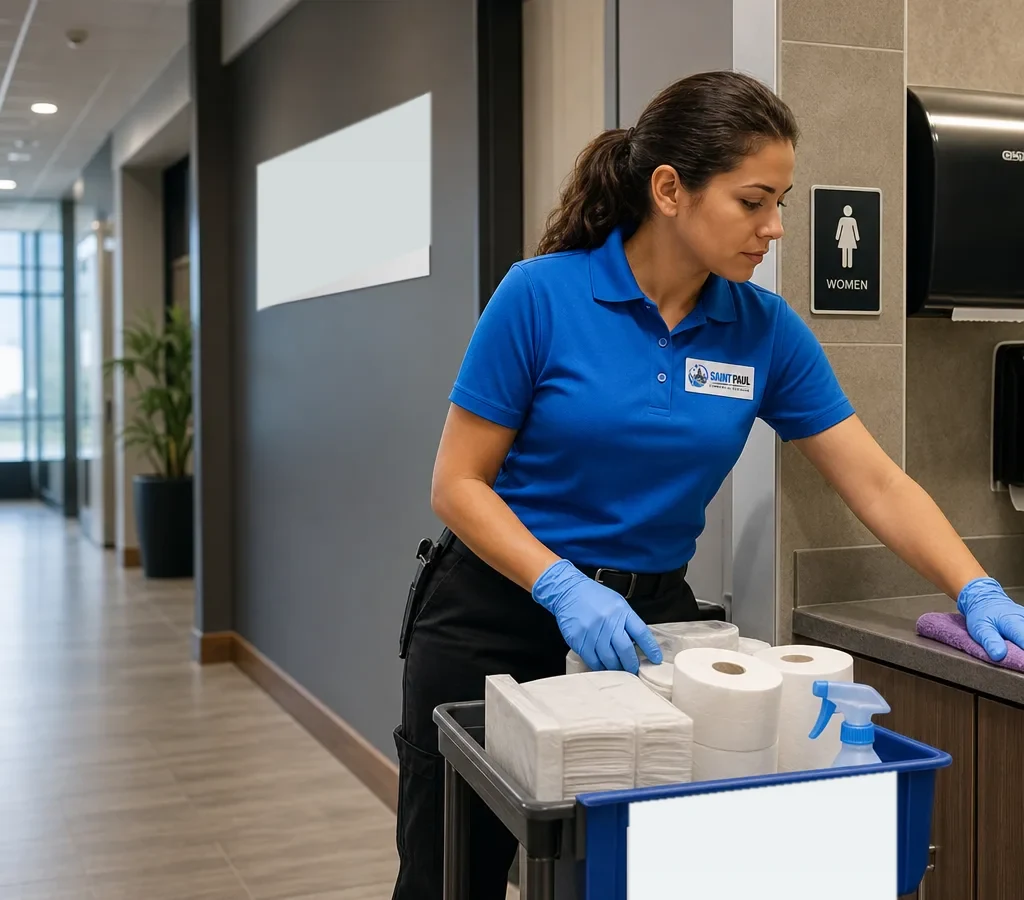
Guest restrooms hold disproportionate weight in a salon or spa, because clients read them as evidence of general standards. Fixtures, mirrors, and floors need a frequency that survives a full day of appointments.
Accessible common surfaces and waste points fill quickly during back-to-back bookings. Naming them in the scope keeps them from being handled only when someone notices.
Hard floors, mats, and thresholds show product residue and winter grit faster than most surfaces. Treating them deliberately keeps the space looking cared for between deep cleans.
A practical process
01
We walk the salon during a working day and see where the pressure actually lands: reception between appointments, the restroom after a busy afternoon, the floors around styling stations.
02
You get the plan in writing, naming guest-facing areas and agreed accessible spaces with tasks and frequencies. Treatment-room specifics and specialist equipment stay outside the scope unless agreed.
03
We agree when crews can work, so cleaning fits between appointments or after close rather than while guests are in the chair.
04
We revisit the plan as booking patterns change. A busy season, extended hours, or a new service line all change which areas need more frequent attention.
Common questions
We start with what is going wrong now, not a standard list. The scope names reception, waiting areas, guest restrooms, and agreed accessible spaces, with frequency for each.
Yes. Cleaning during appointments is disruptive and visible to guests. We set the service window around your booking schedule, usually before opening or after close.
Access is agreed up front and written into the scope: which areas are available, what entry arrangements apply, and which treatment spaces stay outside the arrangement.
Tell us the size of the space, which areas concern you most, your busiest days, and whether you need recurring service or a one-off reset. That is enough to scope it.
Request an estimate
What usually goes wrong
Salons and spas sell an atmosphere, which means cleaning failures cost more here than the same failure would elsewhere. A guest sitting in reception has time to study the room, and small things read loudly: a smudged entry door, dust on a display shelf, a bin that filled up an hour ago.
The scheduling problem is specific to appointment businesses. Back-to-back bookings leave no natural gap for anything beyond a quick reset, so the deeper work waits for a quiet moment that a well-booked week never produces. Standards then depend on how busy you happen to be, which is exactly the wrong variable.
Guest restrooms carry the sharpest version of this. Clients treat them as evidence of hygiene throughout the business, so a restroom that has not been checked since the morning undermines everything else. That space needs a defined check frequency rather than an assumption that someone will notice.
We name the guest-facing areas, agree how often each is addressed, and set the service window around your booking schedule instead of against it. Treatment-room specifics and specialist equipment stay outside the scope unless separately agreed. For a periodic reset, the deep cleaning page covers how that work is planned.
Request an estimate
Share a few details about your commercial cleaning needs and we will follow up about the right scope for your space.