
Lobby, Reception, And Corridor Maintenance
Lobbies and corridors are the shared face of the building. Every tenant's visitors pass through them, and they are exactly the spaces where responsibility is least clearly assigned.
Serving Saint Paul, Minnesota & surrounding areas
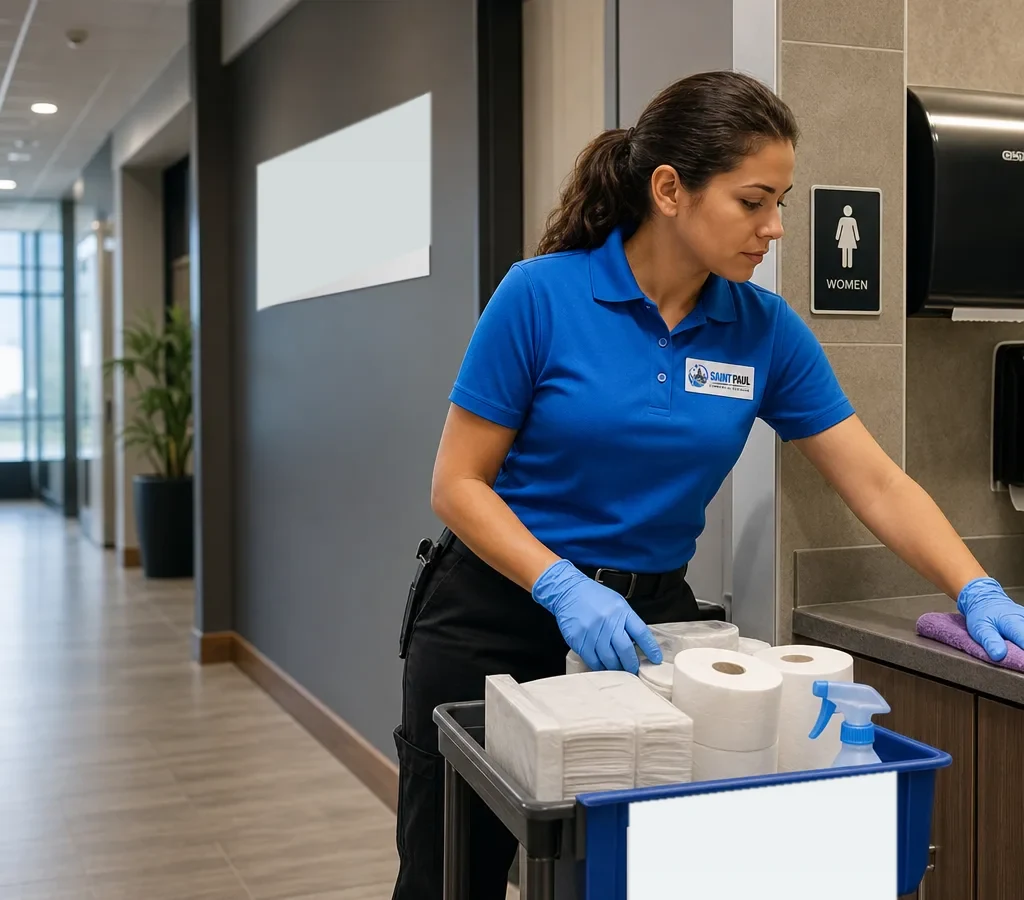
Industry-specific cleaning in Saint Paul
Office building cleaning in Saint Paul for shared areas, tenant boundaries, and agreed accessible spaces. Set priorities around building access, occupancy, and the common areas people encounter.
Industry overview
Office-building cleaning needs a building-wide view before it needs a task list. A lobby, corridor, shared restroom and entry area may affect every tenant, while individual suites can have their own access rules and responsibilities. A useful scope starts by separating common-area priorities from tenant boundaries, then identifying the spaces the building manager wants included and the times those spaces can be accessed.
The result is clearer than a generic workplace-cleaning package. It gives the manager a way to describe where people enter, move and wait, which shared surfaces or floors are most visible, and how building access affects the plan. It does not assume tenant permissions, keyholding, fixed service hours or a particular building type. Instead, it creates a basis for discussing agreed accessible spaces and recurring commercial care around the property’s actual occupancy.
Request an EstimateScope and tasks
Lobbies and corridors are the shared face of the building. Every tenant's visitors pass through them, and they are exactly the spaces where responsibility is least clearly assigned.
Shared restrooms generate more tenant complaints than anything else in a multi-tenant property. Fixtures, floors, and supply levels need a named frequency rather than an assumption.
Elevator touchpoints, entry glass, and common doors take constant contact all day. Handprints and smudges here are noticed by everyone who enters and reflect on the whole building.
Carpet, matting, and hard floors in common spaces carry the traffic of every tenancy combined. Winter grit accelerates the wear unless entry matting is managed as part of the plan.
A practical process
01
We walk the building and look at the shared spaces in use: the lobby mid-morning, the corridors between floors, the restrooms that tenants have been raising.
02
You get the plan in writing, separating common-area responsibility from tenant space with named tasks and frequencies, so the boundary is documented rather than debated.
03
We agree when crews can work, so cleaning happens outside core hours and does not run into tenant meetings, deliveries, or visitor traffic.
04
We review the plan when the building changes. New tenancies, altered hours, or a shift in occupancy all change which shared spaces need more attention.
Common questions
We start with what tenants are actually raising, not a standard list. The scope names lobbies, corridors, shared restrooms, and common floors, with tasks and frequency for each.
Yes. Cleaning during core hours competes with tenants for the same space. We set the service window around building hours, usually early morning or after close.
Access is agreed up front and written into the scope: which common areas are included, what keys or codes apply, and where tenant responsibility begins.
Tell us the size of the common areas, the number of tenancies, what is not working now, and when we can get in. That is enough to scope the work properly.
Request an estimate
What usually goes wrong
Office-building complaints almost always concentrate in shared space. Individual suites are cleaned to whatever standard each tenant arranges, and the lobby, corridors, and shared restrooms sit in between, belonging to everyone and owned by no one in particular. That gap is where standards drift and where tenant frustration builds.
Shared restrooms are the sharpest version of the problem. They serve every floor, they are used constantly, and a single missed check is visible to dozens of people. When a scope says only that restrooms are cleaned daily, without naming the checks or the supply responsibility, it tends to hold in quiet weeks and fail in busy ones.
Access and timing are the other constraint. Core hours are the worst time to clean a working building, but a purely overnight routine can leave high-traffic areas unattended through a full day. Most buildings need an out-of-hours routine plus defined daytime checks in the areas that carry the most traffic.
We write down which common areas are covered, at what frequency, and where tenant responsibility begins, so the boundary is explicit. For heavier periodic work, the floor care and window cleaning pages explain how those are scoped as separate projects.
Request an estimate
Share a few details about your commercial cleaning needs and we will follow up about the right scope for your space.